86 % of all investors vote in favour of selling the ADLON Hotel / Secondary market investors prevent the required three-quarters majority of the capital / Anno August Jagdfeld aims for a second attempt
Berlin/Düren, 1 September 2026. With 86 % of the vote, a large majority of the shareholders in the ADLON Fund have now approved the resolution to sell the ADLON, which was initiated by a number of the fund’s original investors. However, the 75 % majority required by the partnership agreement was narrowly missed, with 71.04 % voted in favour – falling short by 3.96 % points.
The reason for the discrepancy lies in the structure of the fund, which was launched in 1994. Around % of the shareholders are retail investors. In addition, professional secondary market investors have bought into the fund in recent years, acquiring shares with a nominal value of around €35 million at low prices, which has now tipped the balance. “I very much regret that the wish of the overwhelming majority of ADLON investors to receive a fair price for their shares cannot be met for the time being,” said Anno August Jagdfeld, founder and managing director of the ADLON Fund.
86 % of investors represent a clear mandate for a second attempt
The general partner adds: “It is also clear, however, that 86 % of our shareholders want the sale to go ahead. That is an overwhelming mandate to attempt the sale once again. Nor have the objective reasons changed: now is the right time for the company to sell. This is the only way to ensure that the small investors from the very beginning – many of whom are now in their eighties and are helpless on their own due to a lack of alternatives – get their due. I feel a particular obligation towards them. They helped build up the ADLON and should also receive a fair price. All secondary market investors are achieving an outstanding return anyway.”
Significant public attention and conflicting interests have led to confusion
Jagdfeld also explains that the significant public attention and conflicting interests have led to confusion – for example, regarding the minimum sale price of €280 million, which was criticised as being too low. “This figure is based on the expertise of international market players and comprehensive market research, and was determined with the input of internal and external experts who have been advising on the property from a technical, legal and economic perspective for years. All the insights we have gained from our long-standing involvement with the property have been taken into account. Outsiders naturally lack this information, meaning they cannot provide reliable figures,” said the ADLON founder.
The actual sale process will not begin until ADLON investors have approved it by a majority of 75 % of the capital. An international tender process will then be conducted, which offers the best guarantee of achieving the highest possible price. To achieve this, however, an entry point must first be chosen that opens up the possibility of the necessary bidding dynamics developing, leading to prices that do justice to the ADLON as a trophy property.
“80 % is a lower limit, not an upper limit. Anyone who believes the ADLON is worth more has nothing to lose in an orderly process – any additional proceeds would benefit everyone. Rejection, however, does not protect any value. The actual value is always determined by the market, not by an expert report,” the fund’s managing director points out.
The ADLON Fund has been in existence since 1994. Closed-end funds are usually wound up after 20 to 30 years. Because the number of investors wishing to sell rises as they get older and private investors are now rarely buying, the secondary market price has for years been well below half the nominal value – a discount that reflects the issue of the shares’ fungibility, but not the value of the building itself.
Jagdfeld highlights the resulting discrepancy: “A secondary market buyer who invested at just over 40 % will, at 80 %, receive almost double their initial investment within a short space of time. An investor from the very beginning, who subscribed for 100 % in 1994, needs the property to be sold after more than 30 years in order to achieve a decent return – together with the tax benefits realised long ago. These investors built up the ADLON. They should receive a fair price.” Anno August Jagdfeld is therefore appealing to all retail investors not to sell their shares for the time being.
What happens next
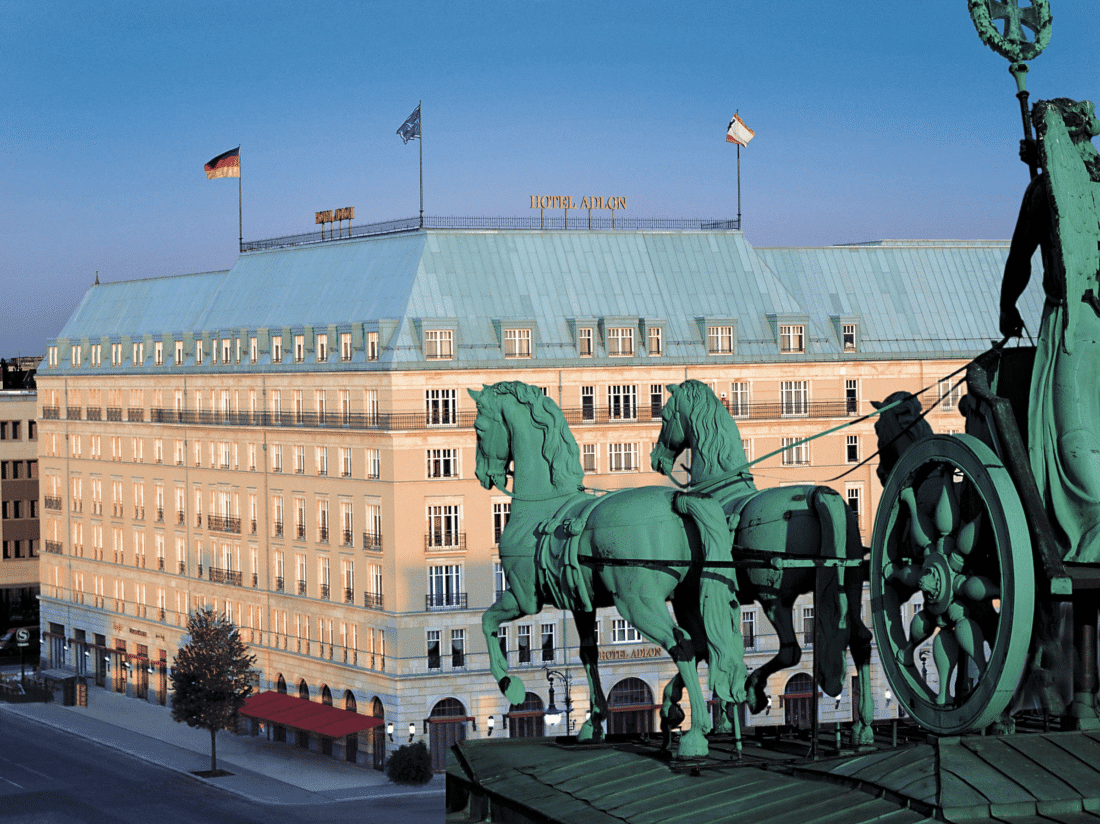
Now that the vote has concluded, nothing will change for the time being: the fund management company will continue to operate as before, and for all guests, partners and staff at Germany’s most famous hotel, everything will remain as usual in any case.
Jagdfeld is calling for increased vigilance, as investors have recently been confronted with what appear to be fraudulent offers. The established secondary market platforms are expressly not affected by this.
“To ensure that retail investors are not once again denied an exit on economically fair terms, financial investors and retail investors must be treated equally in financial terms. I am therefore seeking to hold a new vote on the sale as soon as possible,” said ADLON founder Jagdfeld.
About the ADLON Fund
The Jagdfeld Hotel-Adlon FUNDUS FONDS No. 31 GmbH & Co. KG (ADLON Fund for short) was launched in 1994 with approximately 4,400 investors and financed the reconstruction of the Hotel Adlon on Pariser Platz, which opened on 23 August 1997. The hotel is operated by Kempinski. In addition to private investors, secondary market investors, individual savings banks and other institutional investors hold stakes in the fund.
Press contact
Dr. Christian Plöger
Head of Corporate Communications & Public Affairs at the Jagdfeld Group
Tel.: +49 30 2094 6779 · Mobile: +49 172 263 89 04 · E-Mail: christian.ploeger@jagdfeld-gruppe.de